SAP Business One for Mining & Quarrying
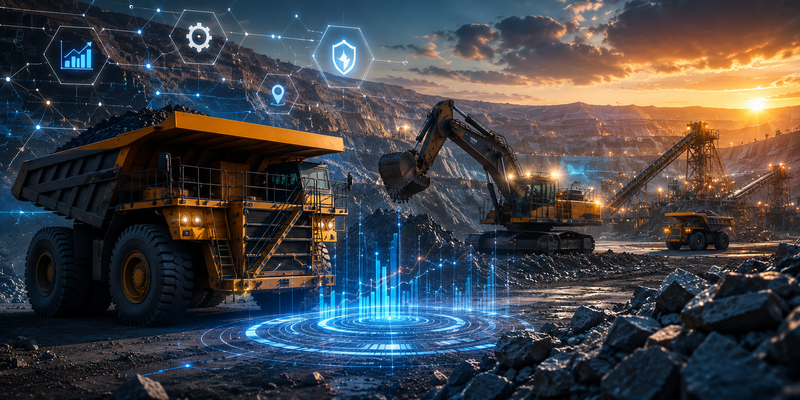
Why SAP Business One is the Ideal ERP Solution for Mining & Quarrying Businesses
Introduction
The Mining & Quarrying industry is one of the most asset-intensive and operationally demanding sectors in the global economy. Mining companies operate in challenging environments where success depends on maximizing equipment availability, controlling operating costs, managing complex supply chains, maintaining regulatory compliance, and ensuring the health and safety of employees.
Whether extracting precious metals, industrial minerals, aggregates, coal, limestone, granite, sand, or other natural resources, mining and quarrying businesses require complete visibility into their operations. Every stage—from exploration and extraction to processing, stockpiling, transportation, and sales—must be carefully managed to achieve sustainable profitability.
Many mining organizations begin with separate systems for accounting, maintenance, inventory, procurement, production, and project management. As operations expand, these disconnected systems create data duplication, limited operational visibility, inefficient maintenance planning, uncontrolled procurement, and delayed financial reporting.
SAP Business One provides an integrated ERP platform that connects financial management, procurement, inventory, warehouse operations, maintenance, project management, customer relationship management (CRM), production, service management, and business intelligence. This enables mining companies to improve operational efficiency, reduce costs, enhance equipment reliability, and strengthen financial performance.
Understanding the Mining & Quarrying Industry
The Mining & Quarrying industry encompasses organizations involved in extracting, processing, transporting, and selling minerals and natural resources.
Businesses that benefit from SAP Business One include:
- Gold mining companies
- Platinum mining companies
- Diamond mining companies
- Coal mining companies
- Iron ore producers
- Copper mining companies
- Chrome mining companies
- Manganese mining companies
- Limestone quarries
- Granite quarries
- Sand and aggregate suppliers
- Cement raw material producers
- Mineral processing plants
- Drilling contractors
- Mining equipment service providers
Although operations vary, these businesses all require effective asset management, procurement, production planning, inventory control, maintenance management, and financial reporting.
Common Challenges Faced by Mining & Quarrying Companies
Equipment Availability
Mining operations rely on expensive production equipment.
Examples include:
- Excavators
- Haul trucks
- Loaders
- Crushers
- Conveyors
- Drilling rigs
- Screening plants
- Pumps
- Compressors
- Processing equipment
Unexpected equipment failures can result in significant production losses.
Maintenance Management
Mining equipment operates under harsh conditions.
Organizations must manage:
- Preventative maintenance
- Predictive maintenance
- Emergency repairs
- Spare parts
- Maintenance schedules
- Equipment inspections
- Maintenance history
Proper maintenance improves equipment availability while reducing operating costs.
Inventory Management
Mining operations require large inventories of maintenance and production materials.
Common inventory includes:
- Spare parts
- Tyres
- Bearings
- Electrical components
- Lubricants
- Explosives (where applicable)
- Safety equipment
- Fuel
- Consumables
Maintaining accurate inventory across multiple sites is essential.
Production Challenges
Mining production must balance:
- Equipment utilization
- Ore quality
- Processing efficiency
- Production targets
- Material recovery
- Stockpile management
- Transportation scheduling
Real-time operational visibility improves production performance.
Financial Challenges
Mining companies often face:
- Commodity price volatility
- Rising fuel costs
- High equipment costs
- Capital investment
- Environmental compliance costs
- Labour costs
Integrated financial management supports informed decision-making.
Why Mining & Quarrying Companies Need ERP
Mining operations involve interconnected business processes.
A single production shift affects:
- Equipment maintenance
- Inventory consumption
- Procurement
- Production reporting
- Warehouse operations
- Project costing
- Financial reporting
Managing these activities through disconnected systems increases operational risk and administrative effort.
An ERP system integrates every operational and financial process into a single platform.
Benefits include:
- Improved equipment reliability
- Better inventory control
- Enhanced procurement
- Increased production visibility
- Improved project management
- Stronger financial reporting
- Better executive decision-making
Why SAP Business One is an Excellent Fit
SAP Business One provides mining organizations with enterprise-grade ERP functionality tailored for growing businesses.
Core functionality includes:
- Financial Management
- Purchasing
- Inventory Management
- Warehouse Management
- Project Management
- Customer Relationship Management
- Service Management
- Fixed Asset Management
- Production Management
- Business Intelligence
The platform integrates with specialist mining applications including fleet management systems, Computerized Maintenance Management Systems (CMMS), weighbridge software, geological systems, GPS fleet monitoring, and production monitoring platforms.
Core Mining & Quarrying Capabilities in SAP Business One
Asset Management
Mining assets represent a substantial capital investment.
SAP Business One supports:
- Asset registers
- Asset acquisition
- Asset depreciation
- Asset transfers
- Asset disposal
- Asset lifecycle management
Integration with Enterprise Asset Management (EAM) solutions extends maintenance planning and asset performance monitoring.
Maintenance Management
Reliable equipment is critical to production.
SAP Business One Service Management supports:
- Preventative maintenance
- Service contracts
- Equipment records
- Maintenance scheduling
- Spare parts management
- Technician assignments
- Service history
- Warranty tracking
Well-planned maintenance reduces downtime and improves equipment availability.
Inventory Management
Mining operations require efficient inventory management.
SAP Business One manages:
- Spare parts
- Maintenance inventory
- Fuel
- Lubricants
- Safety equipment
- Processing chemicals
- Warehouse consumables
Capabilities include:
- Multiple warehouses
- Batch management
- Serial number management
- Bin locations
- Inventory valuation
- Stock transfers
- Inventory counting
Real-time inventory visibility reduces shortages and improves maintenance efficiency.
Warehouse Management
Mining companies often operate multiple warehouses across different sites.
SAP Business One supports:
- Goods receiving
- Warehouse transfers
- Site inventory
- Bin management
- Picking
- Packing
- Barcode scanning
- Inventory counting
Warehouse operations become more accurate and efficient.
Purchasing Management
Mining procurement often involves specialist suppliers and long lead times.
SAP Business One supports:
- Purchase Requests
- Purchase Quotations
- Purchase Orders
- Goods Receipts
- Supplier Returns
- Blanket Agreements
- Landed Costs
- Supplier performance analysis
Purchasing integrates directly with inventory demand and maintenance planning.
Production Management
Mining production requires continuous monitoring.
SAP Business One supports:
- Production Orders (for processing operations)
- Material Requirements Planning (MRP)
- Inventory consumption
- Production costing
- Work in Progress (WIP)
- Finished goods inventory
Managers gain visibility into operational costs and production efficiency.
Project Management
Mining organizations regularly undertake:
- Mine expansion projects
- Processing plant upgrades
- Infrastructure construction
- Exploration activities
- Rehabilitation programmes
SAP Business One enables companies to:
- Create projects
- Allocate budgets
- Monitor costs
- Track milestones
- Measure profitability
- Produce management reports
Project managers gain complete financial visibility throughout the project lifecycle.
Customer Relationship Management (CRM)
Mining companies maintain long-term relationships with:
- Industrial customers
- Export customers
- Commodity traders
- Construction companies
- Government organizations
- Engineering contractors
SAP Business One CRM supports:
- Customer records
- Sales opportunities
- Quotations
- Contracts
- Customer communications
- Sales history
Commercial teams benefit from integrated customer information.
Financial Management
Every operational transaction automatically updates financial records.
SAP Business One includes:
- General Ledger
- Accounts Receivable
- Accounts Payable
- Banking
- Budgeting
- Fixed Assets
- Cash Flow Management
- Cost Centres
- Financial Reporting
Executives gain accurate visibility into operational performance and profitability.
Reporting and Business Intelligence
Mining executives require timely operational information.
SAP Business One provides reports including:
- Equipment utilization
- Maintenance costs
- Inventory valuation
- Production costs
- Supplier performance
- Project profitability
- Cash flow forecasts
- Financial statements
- Asset depreciation
- Operational dashboards
- Executive dashboards
Organizations using SAP Business One, version for SAP HANA, benefit from advanced analytics, interactive dashboards, predictive insights, and high-speed reporting.
Typical Mining & Quarrying Business Processes
SAP Business One supports end-to-end operational workflows:
- Exploration planning.
- Procurement planning.
- Purchase Orders.
- Goods receipt.
- Warehouse storage.
- Equipment maintenance.
- Production operations.
- Processing.
- Inventory management.
- Customer sales.
- Customer invoicing.
- Financial posting.
- Project reporting.
- Asset performance monitoring.
- Executive reporting.
Every business process is connected through one integrated ERP platform.
Typical SAP Business One Integrations
Mining & Quarrying businesses commonly integrate SAP Business One with:
- Enterprise Asset Management (EAM) systems
- Computerized Maintenance Management Systems (CMMS)
- Fleet Management Systems
- Weighbridge software
- GPS fleet tracking
- SCADA systems
- Geological modelling software
- Mine planning applications
- Warehouse Management Systems (WMS)
- Mobile maintenance applications
- Business Intelligence platforms
These integrations create a connected digital mining operation with improved operational visibility.
Key Performance Indicators (KPIs)
Mining organizations can monitor:
- Equipment Availability
- Equipment Utilization
- Mean Time Between Failures (MTBF)
- Mean Time to Repair (MTTR)
- Maintenance Cost per Asset
- Production Volume
- Cost per Tonne
- Ore Recovery Rate
- Inventory Turnover
- Spare Parts Availability
- Supplier On-Time Delivery
- Project Cost Variance
- Cash Flow
- Gross Margin by Operation
- Return on Assets
These KPIs help management optimize production, reduce costs, and improve profitability.
Return on Investment (ROI)
Mining & Quarrying companies commonly achieve measurable value from SAP Business One through:
- Improved equipment reliability with proactive maintenance planning.
- Reduced inventory carrying costs through better stock visibility and control.
- Faster procurement supported by integrated purchasing and supplier management.
- Better production cost tracking and operational reporting.
- Improved project management for expansion, exploration, and capital works.
- Enhanced financial reporting with integrated accounting and operational data.
- Reduced administrative effort through automated workflows.
- Improved executive decision-making with real-time dashboards and analytics.
These improvements help mining organizations reduce operating costs, improve production efficiency, strengthen financial performance, and support sustainable long-term growth.
Example Business Scenario
A quarry operator supplying aggregates to the construction industry managed maintenance, procurement, production, inventory, and finance using separate applications. Equipment downtime caused frequent production interruptions, spare parts inventory was inaccurate, and management had limited visibility into operating costs.
After implementing SAP Business One and integrating it with its fleet maintenance and weighbridge systems, procurement, inventory, maintenance, production, and finance were unified into a single ERP platform. Maintenance schedules became proactive, spare parts inventory was optimized, production costs were monitored in real time, and executives gained dashboards showing equipment performance, inventory levels, production volumes, and profitability.
The company reduced equipment downtime, lowered maintenance costs, improved inventory accuracy, strengthened procurement planning, and achieved greater operational and financial control.
Why Choose SAP Business One for Mining & Quarrying?
Mining & Quarrying companies require an ERP platform that delivers operational visibility, asset control, inventory accuracy, financial discipline, and scalability. SAP Business One provides a comprehensive solution that integrates maintenance, procurement, production, inventory, project management, customer management, and finance into a single platform.
With real-time information, robust reporting, and seamless integration with specialist mining technologies, SAP Business One enables mining organizations to improve operational efficiency, maximize equipment availability, reduce costs, strengthen financial performance, and build a solid foundation for sustainable growth.