Evolution of Artificial Intelligence (AI) and your ERP
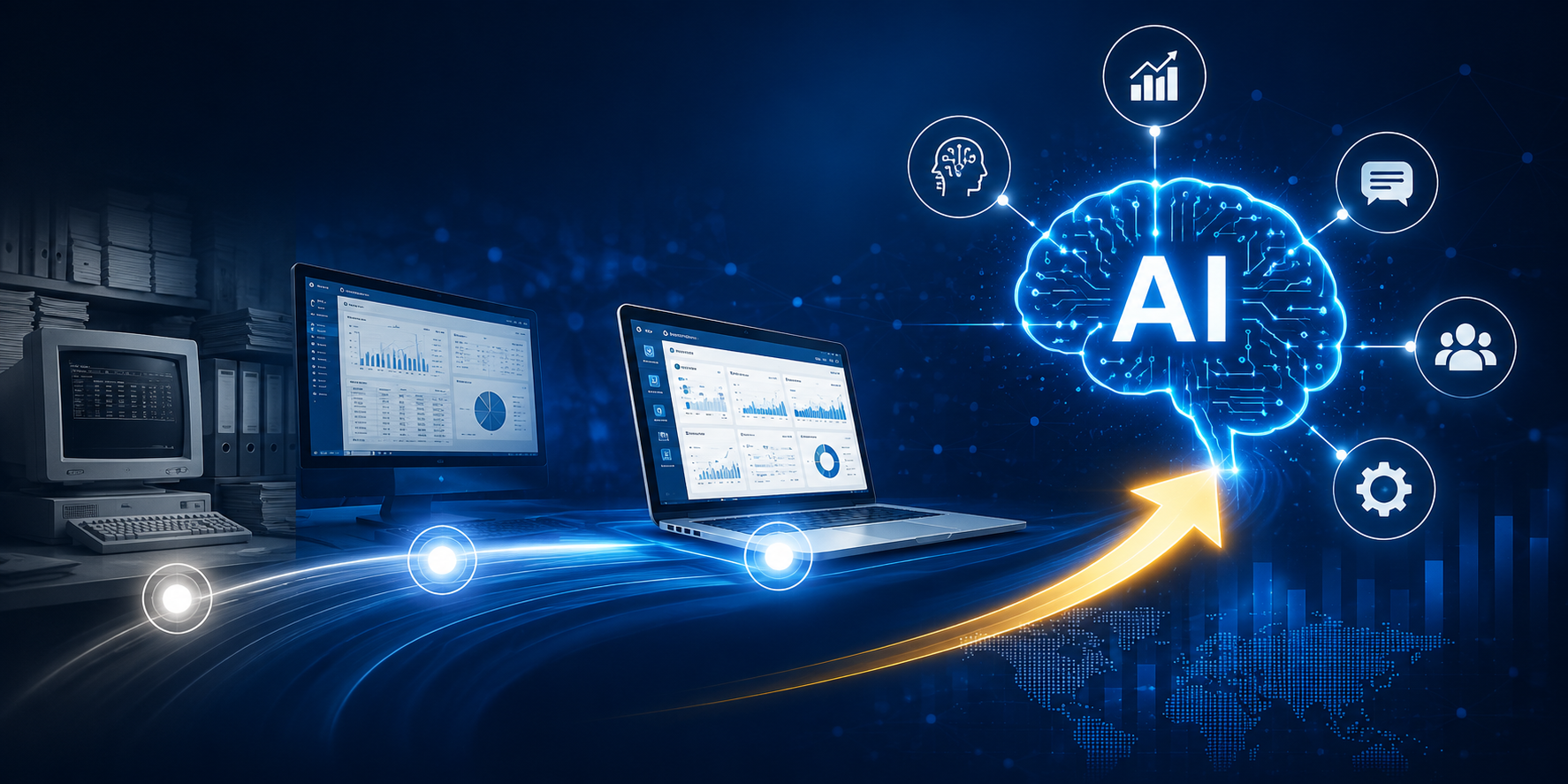
Artificial Intelligence (AI) is transforming the way businesses operate, and Enterprise Resource Planning (ERP) systems are at the center of this evolution. While ERP systems have traditionally helped organizations manage finance, inventory, sales, purchasing, and operations, AI is taking these capabilities to the next level by making systems more intelligent, predictive, and automated. For businesses looking to improve efficiency, reduce costs, and make better decisions, the combination of AI and ERP presents significant opportunities. What Is AI in ERP? Artificial Intelligence in ERP refers to the use of technologies such as:
- Machine Learning (ML)
- Predictive Analytics
- Natural Language Processing (NLP)
- Intelligent Automation
- Pattern Recognition
These technologies allow ERP systems to analyze large volumes of data, identify trends, make recommendations, and automate routine tasks. Rather than simply recording transactions, AI-powered ERP systems help businesses predict outcomes and make proactive decisions.
1. Smarter Decision-Making
One of the biggest advantages of AI is its ability to analyze data quickly and identify patterns that humans might miss. AI can help answer questions such as:
- Which products are likely to sell next month?
- Which customers are at risk of late payment?
- Where are inventory shortages likely to occur?
- Which suppliers are experiencing performance issues?
Instead of relying solely on historical reports, businesses can use predictive insights to make faster and more informed decisions.
2. Improved Demand Forecasting
Accurate forecasting is critical for inventory management and production planning. Traditional forecasting often relies heavily on historical sales data. A
I can go further by considering:
- Seasonal trends
- Market conditions
- Customer behavior
- Historical demand patterns
- External factors
This leads to more accurate forecasts and helps businesses:
- Reduce excess inventory
- Prevent stock shortages
- Improve customer service
- Optimize purchasing decisions
3. Automated Financial Processes
Finance departments spend considerable time on repetitive administrative tasks.
AI can automate activities such as:
- Invoice processing
- Expense categorization
- Bank reconciliations
- Payment matching
- Financial anomaly detection
Automation improves efficiency while reducing the risk of human error. This allows finance teams to focus more on analysis and strategic planning rather than transaction processing.
4. Better Cash Flow Management
Cash flow is a critical concern for many businesses.
AI-powered ERP systems can help by:
- Predicting future cash flow
- Identifying overdue accounts
- Highlighting payment trends
- Forecasting funding requirements
Businesses gain greater visibility into their financial position and can take proactive action before cash flow issues arise.
5. Enhanced Inventory Optimization
Inventory management is one of the areas where AI can deliver immediate value.
AI can:
- Recommend reorder quantities
- Predict stock shortages
- Identify slow-moving inventory
- Suggest optimal inventory levels
- Analyze supplier performance
This helps businesses reduce carrying costs while maintaining product availability.
6. Intelligent Customer Insights
Customer data stored within ERP systems can provide valuable business intelligence.
AI can help organizations:
- Identify high-value customers
- Predict customer purchasing behavior
- Detect potential customer churn
- Recommend cross-selling opportunities
These insights enable businesses to strengthen customer relationships and improve revenue growth.
7. Improved Operational Efficiency
AI helps identify inefficiencies across business processes.
Examples include:
- Production bottlenecks
- Underutilized resources
- Workflow delays
- Procurement inefficiencies
- Repetitive manual tasks
By highlighting areas for improvement, AI helps businesses optimize operations and reduce costs.
8. Predictive Maintenance in Manufacturing
For manufacturers, equipment downtime can be extremely costly. AI can analyze machine performance data and identify early warning signs of potential failures.
Benefits include:
- Reduced downtime
- Lower maintenance costs
- Improved equipment reliability
- Better production planning
Predictive maintenance allows businesses to address issues before they disrupt operations.
9. Natural Language Queries and AI Assistants
Modern ERP systems increasingly include AI-powered assistants that allow users to interact with data using natural language.
Instead of building complex reports, users can ask questions such as:
- "What were our sales last month?"
- "Which customers have overdue invoices?"
- "What inventory is below minimum stock levels?"
- "Show me our top-performing products."
This makes information more accessible to employees across the organization.
10. Stronger Business Intelligence
AI enhances Business Intelligence by uncovering patterns and insights that traditional reporting may not reveal.
Organizations can benefit from:
- Automated dashboards
- Trend analysis
- Exception reporting
- Performance monitoring
- Strategic forecasting
AI transforms ERP data into actionable insights that support better business outcomes.
Challenges to Consider While AI offers significant benefits, successful adoption requires:
- High-quality data
- Well-defined business processes
- Employee training
- Strong governance
- Clear business objectives
AI is only as effective as the data and processes that support it. Businesses should focus on building a solid ERP foundation before implementing advanced AI capabilities.
The Future of AI and ERP As AI continues to evolve, ERP systems are expected to become increasingly autonomous.
Future capabilities may include:
- Self-optimizing inventory levels
- Automated purchasing decisions
- Advanced financial forecasting
- Intelligent workflow management
- Real-time risk identification
The role of ERP will shift from simply managing business processes to actively guiding and optimizing them.
The Bottom Line Artificial Intelligence is transforming ERP from a transactional system into a strategic business tool. By combining real-time data with predictive analytics and automation, AI helps businesses make smarter decisions, improve efficiency, reduce costs, and respond more quickly to changing market conditions.
For organizations embracing digital transformation, AI-powered ERP systems offer a powerful opportunity to gain a competitive advantage and build a more agile, data-driven business. The future of business management is not just digital—it is intelligent.
Follow Us At:
https://www.facebook.com/4mostSAPBusinessOne
https://www.youtube.com/@4mostSystems-bv2zf
https://www.linkedin.com/company/4most-systems-pty-ltd
https://x.com/4most_erp_group
https://www.instagram.com/4mostsystems/