Business Growth Challenges: Why Success Often Creates New Problems
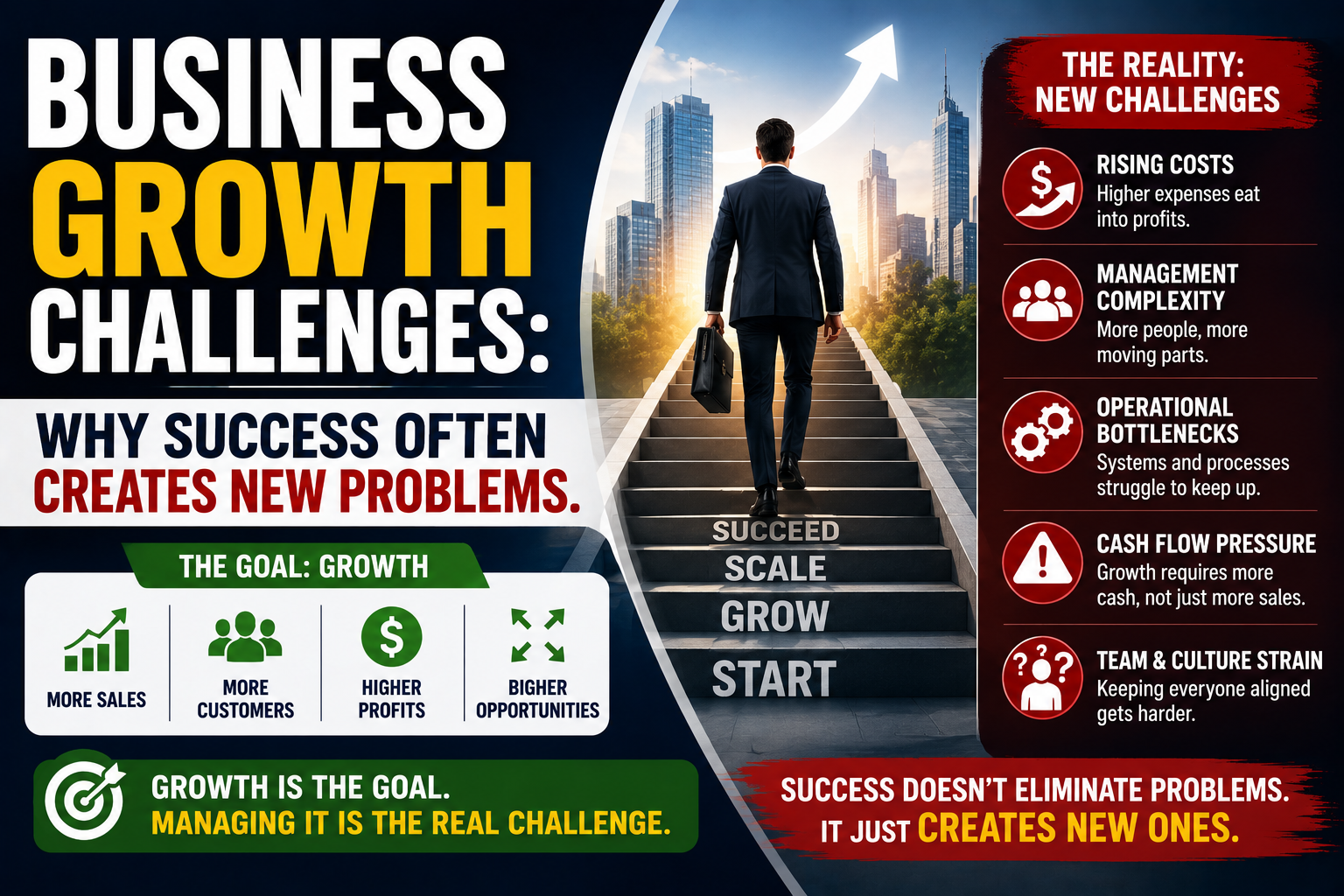
Growth is a goal for most businesses, but growth itself can introduce a new set of challenges. As companies expand, the processes, systems, and strategies that once worked effectively may no longer be sufficient to support increasing demands. Without careful planning and the right tools, rapid growth can place significant pressure on operations, finances, employees, and customer service. Here are some of the most common business growth challenges and how organizations can address them.
1. Managing Cash Flow One of the biggest surprises for growing businesses is that increased sales do not always translate into increased cash. As a company grows, it often needs to:
- Purchase more inventory
- Hire additional employees
- Invest in equipment
- Expand facilities
- Increase operational spending
At the same time, customers may still take 30, 60, or even 90 days to pay invoices. This gap between spending and receiving payment can create serious cash flow pressure. Solution: Implement strong cash flow forecasting, improve collections processes, and gain real-time visibility into financial performance.
2. Outgrowing Existing Systems Many businesses begin with basic accounting software, spreadsheets, and manual processes. As operations become more complex, these tools often struggle to support:
- Higher transaction volumes
- Multiple departments
- Inventory management
- Project tracking
- Advanced reporting
The result is inefficiency, duplicate data entry, and limited visibility. Solution: Invest in scalable business management systems that can support future growth and integrate key business functions.
3. Maintaining Customer Service Standards Growth often brings an increase in customers, orders, and service requests. Without the right processes, businesses may experience:
- Longer response times
- Delayed deliveries
- Increased customer complaints
- Reduced service quality
Poor customer experiences can damage reputation and limit future growth opportunities. Solution: Standardize processes, improve communication, and use technology to manage customer interactions effectively.
4. Hiring and Retaining Talent As businesses expand, they need more skilled employees. Challenges often include:
- Recruiting qualified staff
- Training new employees
- Retaining top performers
- Managing larger teams
Rapid growth can place additional strain on existing employees, increasing the risk of burnout and turnover. Solution: Develop clear recruitment, onboarding, and employee development strategies to support workforce growth.
5. Maintaining Operational Efficiency Processes that work for a small organization may become inefficient as transaction volumes increase. Common issues include:
- Manual approvals
- Duplicate data entry
- Inefficient workflows
- Lack of standardization
These inefficiencies can reduce productivity and increase operating costs. Solution: Automate repetitive tasks and establish scalable processes that can grow with the business.
6. Managing Inventory and Supply Chains Growth often increases demand for products and services. Without proper planning, businesses may face:
- Stock shortages
- Excess inventory
- Supplier delays
- Rising inventory costs
Inventory problems can impact customer satisfaction and cash flow simultaneously. Solution: Implement inventory planning tools and improve supply chain visibility.
7. Limited Visibility Into Business Performance As organizations grow, data often becomes fragmented across multiple systems and departments. Management may struggle to answer questions such as:
- Which products are most profitable?
- What is our current cash position?
- Which customers generate the highest margins?
- Where are operational bottlenecks occurring?
Without accurate information, decision-making becomes more difficult. Solution: Create a single source of truth through integrated reporting and real-time dashboards.
8. Scaling Processes Consistently Growth can expose weaknesses in business processes. Challenges often arise when:
- Different departments follow different procedures
- Information is stored in multiple locations
- Employees develop their own workarounds
Inconsistent processes increase the likelihood of errors and inefficiencies. Solution: Document, standardize, and regularly review business processes.
9. Increased Financial Complexity As businesses grow, financial management becomes more demanding. Companies may need to manage:
- Multiple locations
- Larger budgets
- Additional cost centers
- More complex reporting requirements
- Regulatory compliance obligations
Financial visibility becomes increasingly important for managing growth successfully. Solution: Implement robust financial controls and reporting tools that provide accurate, timely insights.
10. Making Decisions Quickly Growth often increases the pace of business. Leaders must make decisions regarding:
- Hiring
- Expansion
- Pricing
- Investments
- Operations
When information is difficult to access, decision-making slows down and opportunities may be missed. Solution: Use real-time data and reporting tools to support faster, more informed decisions.
How ERP Systems Support Business Growth Modern ERP systems help businesses overcome growth challenges by integrating critical functions such as:
- Finance
- Inventory management
- Purchasing
- Sales
- Customer management
- Production
- Reporting
By providing a centralized view of business operations, ERP systems improve visibility, streamline processes, and support scalable growth.
The Bottom Line Growth is an exciting milestone, but it also introduces new challenges that can strain resources, processes, and profitability. Cash flow pressures, operational inefficiencies, inventory issues, and limited visibility are among the most common obstacles growing businesses face. Organizations that proactively address these challenges with strong processes, accurate data, and scalable technology are better positioned to sustain growth and achieve long-term success. The goal is not simply to grow bigger—it's to grow smarter, with the systems and insights needed to support the business every step of the way.