Three Hidden Costs of Manual Processes
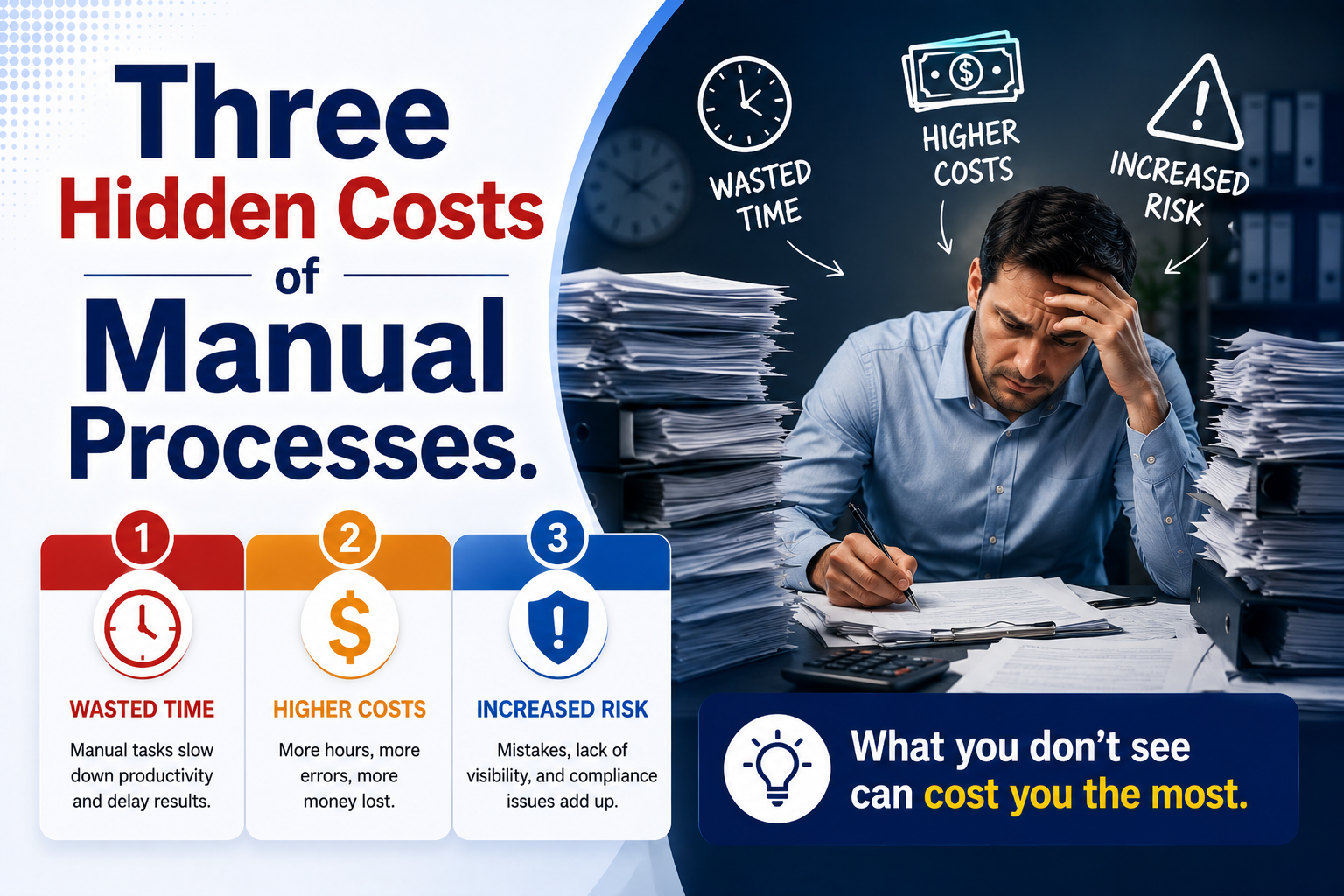
Many businesses continue to rely on manual processes because "it's how we've always done it." While spreadsheets, paper-based approvals, and repetitive data entry may seem inexpensive on the surface, the true cost often goes unnoticed. The biggest challenge is that manual processes rarely fail all at once. Instead, they slowly reduce productivity, increase risk, and impact profitability over time. Here are three hidden costs that businesses often overlook.
1. Lost Productivity and Employee Time One of the most significant costs of manual processes is the amount of time employees spend performing repetitive tasks. Examples include:
- Capturing the same data into multiple systems
- Manually generating reports
- Processing paper-based approvals
- Reconciling spreadsheets
- Searching for information across different files
While each task may only take a few minutes, those minutes quickly add up across an entire organization. Consider a team of ten employees spending just one hour per day on manual administrative work. Over the course of a year, that's thousands of hours that could have been spent on customer service, sales, strategic planning, or other value-adding activities. The result is lower productivity and higher operating costs.
2. Increased Risk of Errors Manual processes are highly dependent on human accuracy, making mistakes inevitable. Common errors include:
- Duplicate data entry
- Incorrect calculations
- Missing information
- Lost paperwork
- Inaccurate reporting
Even small errors can have significant consequences. A misplaced decimal point, an incorrect inventory adjustment, or an overlooked invoice can lead to financial losses, customer dissatisfaction, and costly rework. Beyond the immediate financial impact, errors can damage trust in business data and make decision-making more difficult.
3. Delayed Decision-Making In today's business environment, timely information is critical. When data is spread across spreadsheets, emails, and disconnected systems, management often spends more time gathering information than acting on it. This can lead to:
- Delayed responses to customer demands
- Slow approval cycles
- Missed sales opportunities
- Poor inventory decisions
- Limited visibility into business performance
Without real-time access to accurate information, businesses may struggle to identify issues before they become costly problems. Companies that automate and integrate their processes gain faster access to insights, enabling them to make more informed decisions and respond more quickly to changing market conditions.
The Solution: Automation and Integration Modern ERP and business management systems help eliminate many of the inefficiencies associated with manual processes by:
- Automating routine tasks
- Reducing duplicate data entry
- Improving data accuracy
- Streamlining approvals
- Providing real-time reporting and visibility
By replacing manual processes with integrated workflows, businesses can improve efficiency, reduce costs, and free employees to focus on activities that drive growth.
The Bottom Line The cost of manual processes extends far beyond paper, spreadsheets, or administrative effort. Hidden costs such as lost productivity, increased errors, and delayed decision-making can significantly impact profitability and growth. Businesses that identify and address these inefficiencies position themselves to operate more effectively, make better decisions, and remain competitive in an increasingly digital world.