Why Businesses Lose Money Through Poor Inventory Control
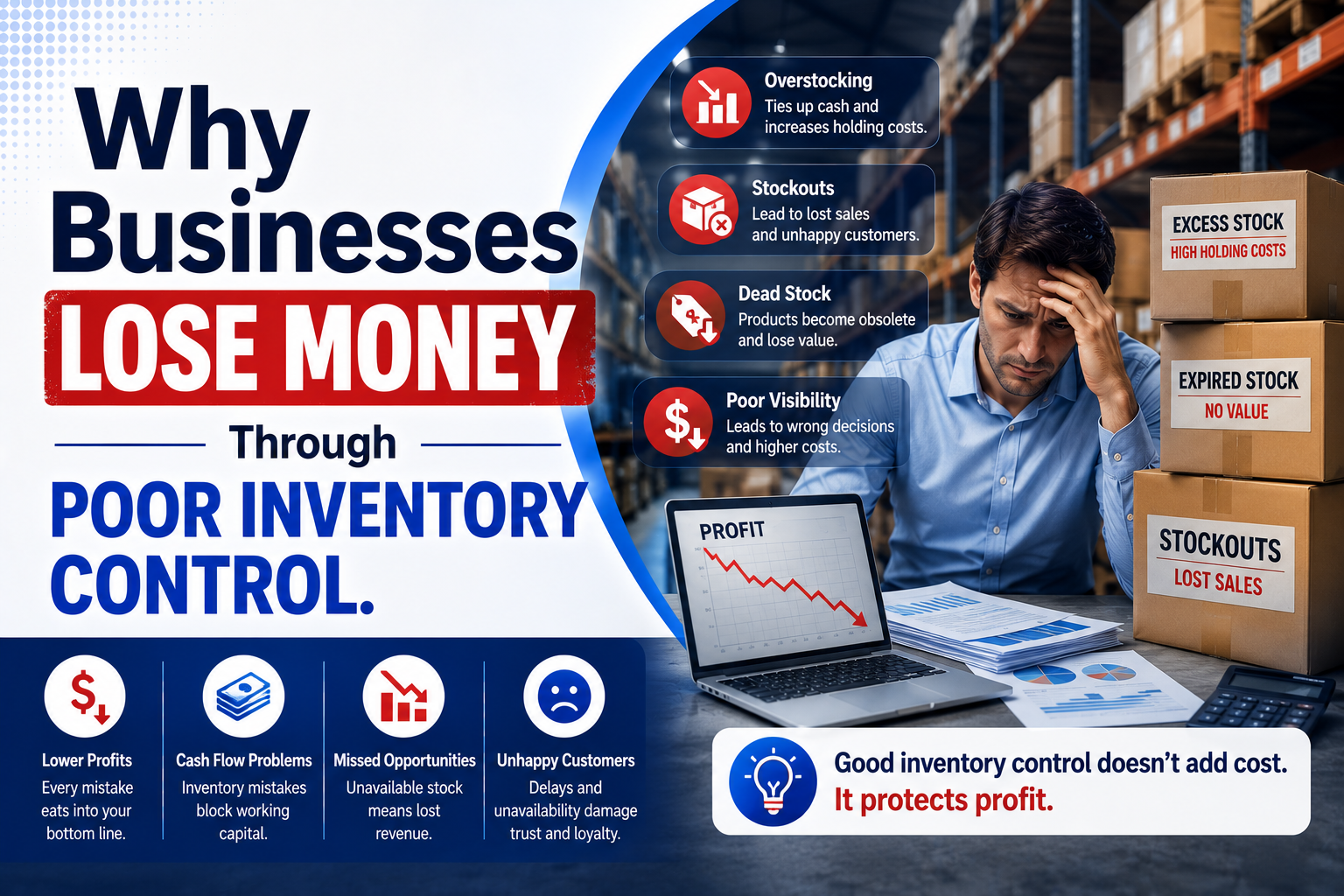
Why Businesses Lose Money Through Poor Inventory Control Inventory is one of the largest investments for many businesses. Yet, poor inventory control remains one of the most common causes of reduced profitability, cash flow problems, and operational inefficiencies. Whether you're a manufacturer, wholesaler, distributor, or retailer, ineffective inventory management can quietly drain profits in ways that are not always immediately visible.
1. Excess Inventory Ties Up Cash Holding too much stock may seem safer than running out, but excess inventory comes at a cost. Businesses with overstocked warehouses often face:
- Reduced cash flow
- Increased storage costs
- Higher insurance expenses
- Greater risk of damage or theft
Money tied up in slow-moving stock cannot be invested in growth opportunities, new products, or operational improvements.
2. Stockouts Lead to Lost Sales On the other hand, insufficient inventory can be just as damaging. When products are unavailable:
- Customers may buy from competitors
- Sales opportunities are lost
- Customer satisfaction declines
- Brand reputation suffers
A single stockout may seem minor, but repeated shortages can lead to long-term customer loss and reduced revenue.
3. Poor Visibility Causes Inefficient Decision-Making Many businesses rely on outdated spreadsheets or manual processes to manage inventory. Without accurate, real-time information, management may struggle to answer questions such as:
- What stock is available right now?
- Which products are moving slowly?
- Which items need replenishment?
- What is the true value of inventory on hand?
Poor visibility often leads to unnecessary purchases, shortages, and inaccurate forecasting.
4. Obsolete and Slow-Moving Stock Erodes Profitability Products that remain in storage for extended periods may become:
- Obsolete
- Damaged
- Expired
- Outdated
These items often need to be discounted or written off entirely. The longer inventory sits on shelves, the greater the risk that it will lose value and negatively impact profitability.
5. Inventory Errors Create Financial Losses Manual inventory management increases the likelihood of:
- Incorrect stock counts
- Duplicate purchases
- Receiving errors
- Picking and shipping mistakes
Even small inaccuracies can create significant financial losses over time through wasted labor, customer returns, and purchasing inefficiencies.
6. Poor Forecasting Leads to Costly Decisions Without reliable inventory data, businesses often struggle to forecast demand accurately. This can result in:
- Overstocking low-demand products
- Understocking high-demand products
- Emergency purchases at premium prices
- Excessive freight and shipping costs
Effective inventory control supports better forecasting and more informed purchasing decisions.
7. Shrinkage Often Goes Undetected Inventory shrinkage can occur through:
- Theft
- Damage
- Administrative errors
- Supplier discrepancies
Without proper controls and regular stock counts, businesses may not identify losses until month-end or year-end, making it difficult to investigate and resolve issues.
8. Operational Efficiency Suffers Poor inventory control affects more than just stock levels. It can lead to:
- Delayed customer orders
- Increased warehouse labor
- Inefficient picking processes
- Production delays
- Poor customer service
As inefficiencies grow, operating costs increase and profit margins shrink.
How Effective Inventory Control Protects Profitability Strong inventory management practices help businesses:
- Maintain optimal stock levels
- Improve cash flow
- Reduce carrying costs
- Increase customer satisfaction
- Minimize stock losses
- Improve forecasting accuracy
Modern ERP systems provide real-time inventory visibility, automated replenishment, warehouse management capabilities, and reporting tools that help businesses maintain tighter control over their stock.
The Bottom Line Poor inventory control doesn't just affect the warehouse—it impacts cash flow, customer satisfaction, operational efficiency, and overall profitability. Businesses that invest in effective inventory management gain better visibility into their operations, make more informed decisions, and position themselves for sustainable growth. In today's competitive environment, controlling inventory effectively is not just a logistical necessity—it's a strategic advantage.