Common Manufacturing Problems and How to Overcome Them
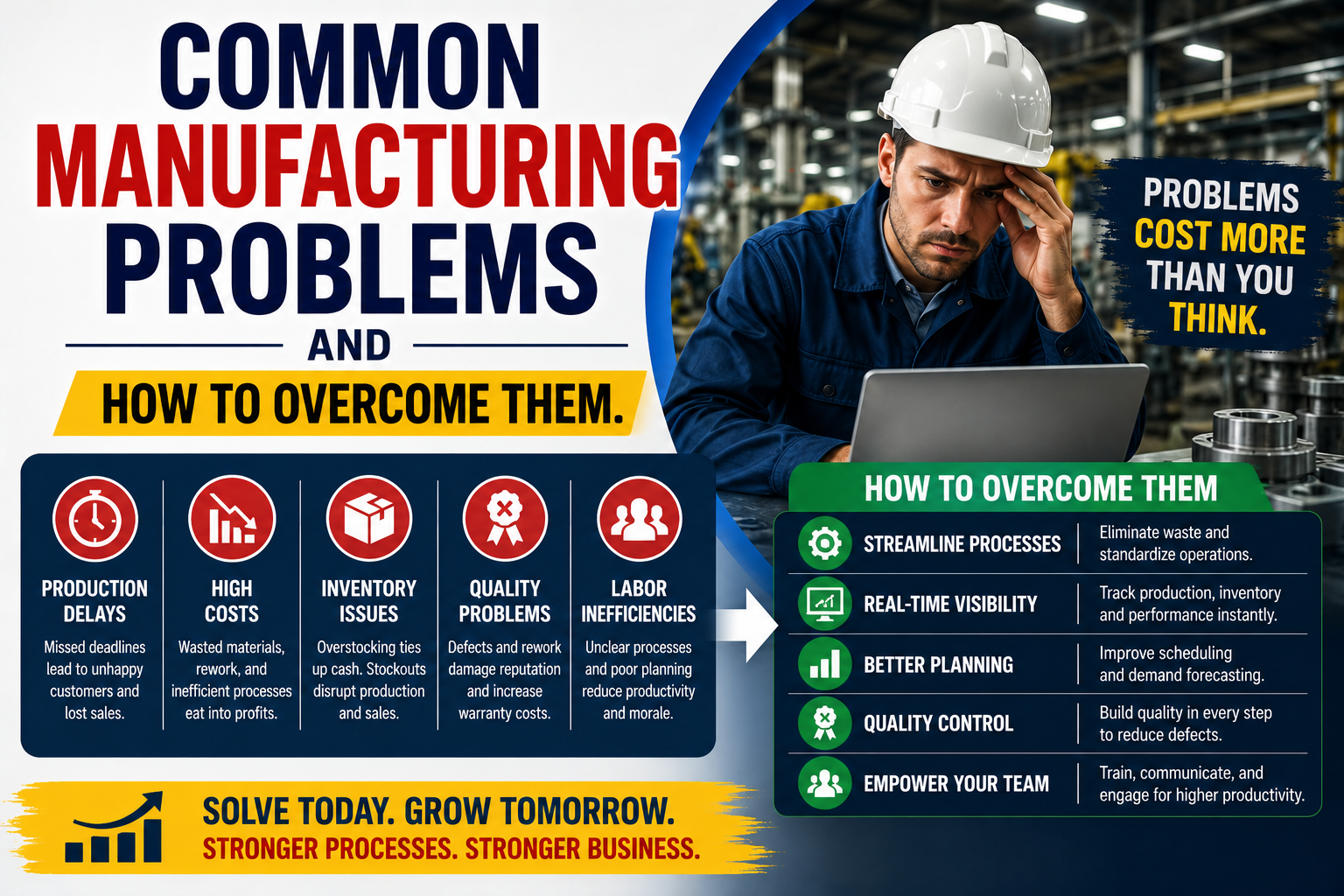
Manufacturing businesses operate in a highly competitive environment where efficiency, quality, and cost control are critical to success. However, many manufacturers face recurring challenges that impact productivity, profitability, and customer satisfaction. Understanding these common problems is the first step toward building a more efficient and resilient operation.
1. Inventory Management Issues Inventory is the foundation of manufacturing, yet many businesses struggle to maintain the right balance. Common challenges include:
- Excess raw materials
- Stock shortages
- Slow-moving inventory
- Inaccurate stock records
- Excessive carrying costs
Poor inventory control can lead to production delays, cash flow constraints, and missed sales opportunities. Solution: Implement real-time inventory tracking and demand planning processes to improve visibility and optimize stock levels.
2. Production Delays Missed production schedules can have a ripple effect throughout the business. Causes often include:
- Material shortages
- Equipment breakdowns
- Poor planning
- Labor shortages
- Inefficient workflows
Production delays can result in late deliveries, customer dissatisfaction, and increased operational costs. Solution: Improve production scheduling, monitor work orders closely, and ensure adequate resource planning.
3. Equipment Downtime Unexpected machinery failures can be one of the most expensive manufacturing problems. Downtime can lead to:
- Lost production hours
- Missed deadlines
- Increased maintenance costs
- Reduced profitability
Many manufacturers rely on reactive maintenance, fixing equipment only after it fails. Solution: Implement preventive maintenance programs and monitor equipment performance regularly.
4. Quality Control Problems Poor quality products can significantly impact profitability and reputation. Common issues include:
- High defect rates
- Rework and scrap
- Customer returns
- Warranty claims
- Production inconsistencies
Quality problems not only increase costs but can also damage customer trust. Solution: Establish quality control procedures, monitor production processes, and use data to identify recurring issues.
5. Inaccurate Demand Forecasting Forecasting errors often create inventory and production challenges. When forecasts are inaccurate, manufacturers may:
- Produce too much inventory
- Experience stock shortages
- Miss customer demand
- Increase storage costs
Reliable forecasting is essential for balancing supply and demand. Solution: Use historical sales data, market trends, and forecasting tools to improve planning accuracy.
6. Rising Production Costs Manufacturers face ongoing cost pressures from:
- Raw materials
- Energy consumption
- Labor expenses
- Transportation costs
- Regulatory compliance
Without visibility into production costs, profitability can quickly decline. Solution: Monitor costs closely and analyze profitability by product, customer, and production line.
7. Supply Chain Disruptions Global supply chains have become increasingly vulnerable to disruptions. Potential causes include:
- Supplier delays
- Transportation challenges
- Material shortages
- Economic uncertainty
- Geopolitical events
Supply chain disruptions can halt production and affect customer commitments. Solution: Diversify suppliers, maintain strategic safety stock, and improve supply chain visibility.
8. Labor Shortages and Skills Gaps Many manufacturers struggle to recruit and retain skilled workers. Challenges include:
- Aging workforce
- Skills shortages
- High employee turnover
- Training requirements
Labor constraints can limit production capacity and increase operating costs. Solution: Invest in workforce development, training programs, and process automation where appropriate.
9. Lack of Real-Time Visibility Many manufacturing decisions are still based on outdated information from spreadsheets and disconnected systems. This can make it difficult to answer questions such as:
- What is currently in production?
- Which orders are delayed?
- What inventory is available?
- What are today's production costs?
Without accurate data, decision-making becomes reactive rather than proactive. Solution: Implement integrated systems that provide real-time operational visibility.
10. Inefficient Production Planning Poor planning can result in:
- Idle machines
- Excess overtime
- Bottlenecks
- Missed delivery dates
- Resource conflicts
Even small planning inefficiencies can significantly reduce overall productivity. Solution: Use production planning and scheduling tools to optimize resources and workflows.
How ERP Systems Help Manufacturers Modern ERP systems help address many manufacturing challenges by integrating:
- Inventory management
- Production planning
- Procurement
- Quality control
- Financial management
- Maintenance tracking
- Supply chain visibility
This creates a single source of truth, enabling better decision-making and improved operational efficiency.
The Bottom Line Manufacturers face a wide range of challenges, from inventory issues and equipment downtime to supply chain disruptions and rising costs. Left unaddressed, these problems can reduce productivity, impact customer satisfaction, and erode profitability. Businesses that invest in better processes, accurate data, and integrated technology are better equipped to overcome these challenges, improve operational performance, and remain competitive in an increasingly demanding marketplace. In manufacturing, success is not just about producing more—it's about producing smarter.