Digital Transformation: More Than Just Technology
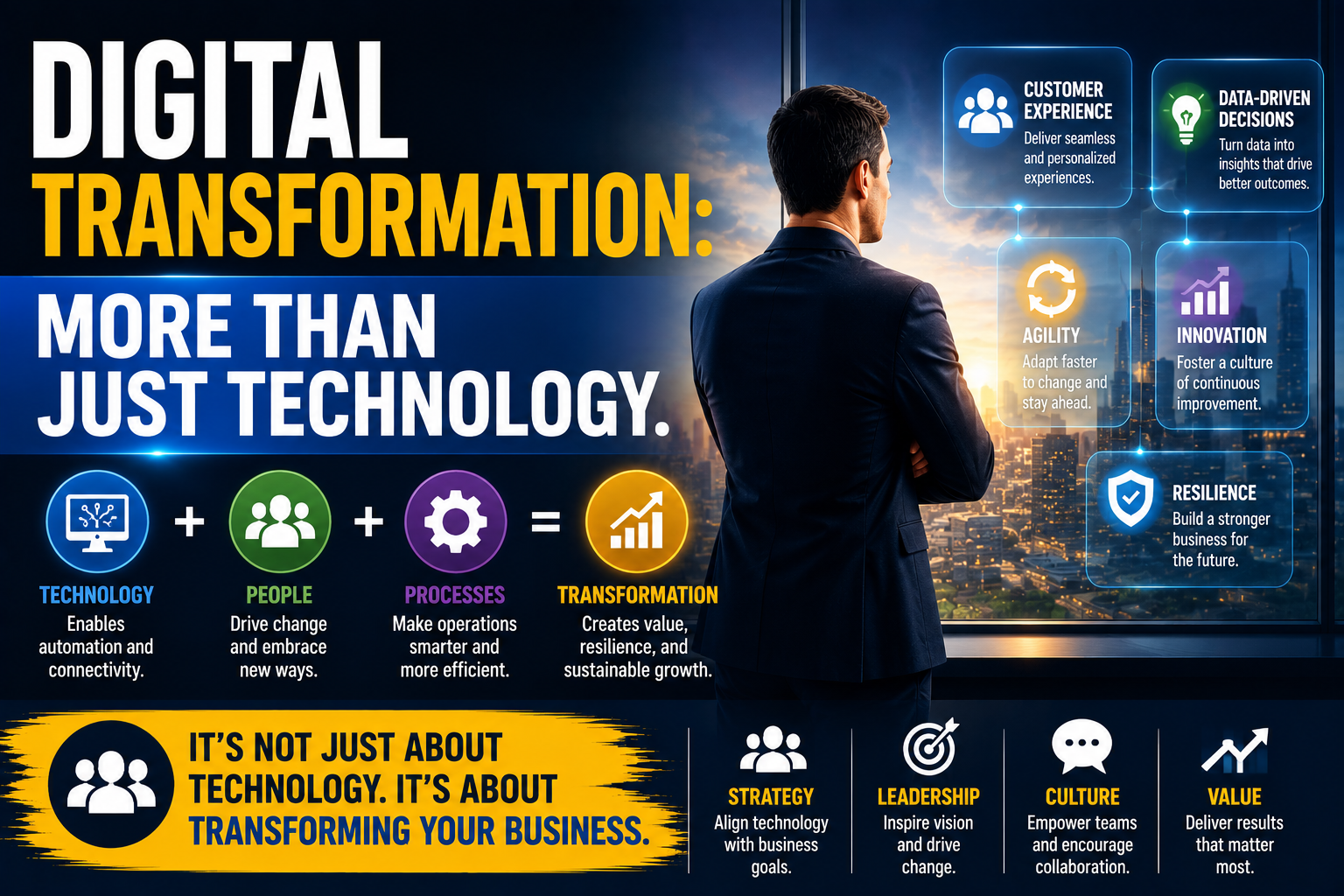
Digital transformation has become one of the most discussed business initiatives in recent years. Yet many organizations mistakenly believe it is simply about implementing new software or moving to the cloud.
In reality, digital transformation is about using technology to improve the way a business operates, serves customers, and makes decisions. It involves rethinking processes, embracing data, and creating a more agile and efficient organization. Businesses that successfully embrace digital transformation are often better positioned to adapt to changing market conditions, improve customer experiences, and drive long-term growth.
What Is Digital Transformation? Digital transformation is the integration of digital technologies into all areas of a business to improve processes, increase efficiency, and deliver greater value to customers. It typically involves:
- Automating manual processes
- Improving access to business data
- Enhancing customer experiences
- Increasing operational visibility
- Enabling data-driven decision-making
The goal is not simply to adopt technology, but to create measurable business improvements.
Why Businesses Are Investing in Digital Transformation Organizations face increasing pressure to:
- Improve productivity
- Reduce costs
- Respond faster to customers
- Manage growing volumes of data
- Remain competitive in evolving markets
Traditional methods such as spreadsheets, paper-based workflows, and disconnected systems often make it difficult to achieve these objectives. Digital transformation helps businesses overcome these limitations and operate more effectively.
1. Improved Operational Efficiency Many organizations spend valuable time on repetitive manual tasks. Examples include:
- Data entry
- Invoice processing
- Inventory updates
- Report generation
- Approval workflows
By automating these activities, businesses can:
- Reduce administrative effort
- Minimize errors
- Improve productivity
- Free employees to focus on higher-value work
Efficiency gains often represent one of the fastest returns on digital transformation investments.
2. Better Decision-Making Through Data Modern businesses generate large amounts of data every day. Without the right systems, this information often remains fragmented across departments and applications. Digital transformation enables organizations to:
- Access real-time information
- Monitor key performance indicators
- Identify trends
- Forecast future performance
- Make informed decisions faster
Data becomes a strategic asset rather than a by-product of operations.
3. Enhanced Customer Experience Customer expectations continue to evolve. Businesses that provide fast, accurate, and personalized service are more likely to build long-term customer loyalty. Digital tools help organizations:
- Respond more quickly to inquiries
- Improve order accuracy
- Track customer interactions
- Provide better service visibility
- Deliver more consistent experiences
A better customer experience often translates directly into improved revenue and retention.
4. Increased Business Agility Market conditions can change rapidly. Businesses need the ability to:
- Adapt to customer demands
- Respond to supply chain disruptions
- Launch new products and services
- Enter new markets
Organizations that rely on outdated systems often struggle to react quickly. Digital transformation creates greater flexibility by providing accurate information and streamlined processes that support faster decision-making.
5. Improved Collaboration Across Departments Many businesses operate with separate systems for:
- Finance
- Sales
- Inventory
- Purchasing
- Manufacturing
- Customer service
This often creates information silos and communication challenges. Digital transformation helps unify these functions, ensuring that employees work from the same information and collaborate more effectively.
Common Barriers to Digital Transformation While the benefits are significant, many organizations face challenges such as:
- Resistance to change
- Legacy systems
- Limited resources
- Poor data quality
- Lack of clear objectives
Successful digital transformation requires leadership support, employee engagement, and a clear understanding of desired business outcomes.
The Role of ERP in Digital Transformation For many organizations, an ERP system serves as the foundation of their digital transformation strategy. ERP solutions help businesses:
- Integrate core business functions
- Automate workflows
- Improve reporting and analytics
- Enhance inventory and financial management
- Provide real-time visibility across the organization
By creating a single source of truth, ERP systems enable businesses to operate more efficiently and make better decisions.
Signs Your Business May Be Ready for Digital Transformation You may be ready to begin your digital transformation journey if:
✔ Employees rely heavily on spreadsheets
✔ Processes are largely manual
✔ Reporting takes too long
✔ Data is spread across multiple systems
✔ Customer service challenges are increasing
✔ Growth is creating operational complexity
✔ Management lacks real-time visibility into performance These are often indicators that existing processes and systems can no longer support the organization's needs.
The Bottom Line Digital transformation is not a technology project—it is a business strategy that uses technology to improve performance, efficiency, and customer value. Organizations that embrace digital transformation gain greater visibility, stronger operational control, improved customer experiences, and the agility needed to compete in a rapidly changing environment. The businesses that thrive in the future will not necessarily be the largest or oldest—they will be the ones that can adapt, innovate, and use technology to work smarter.