Top ERP Trends for SMEs in 2026
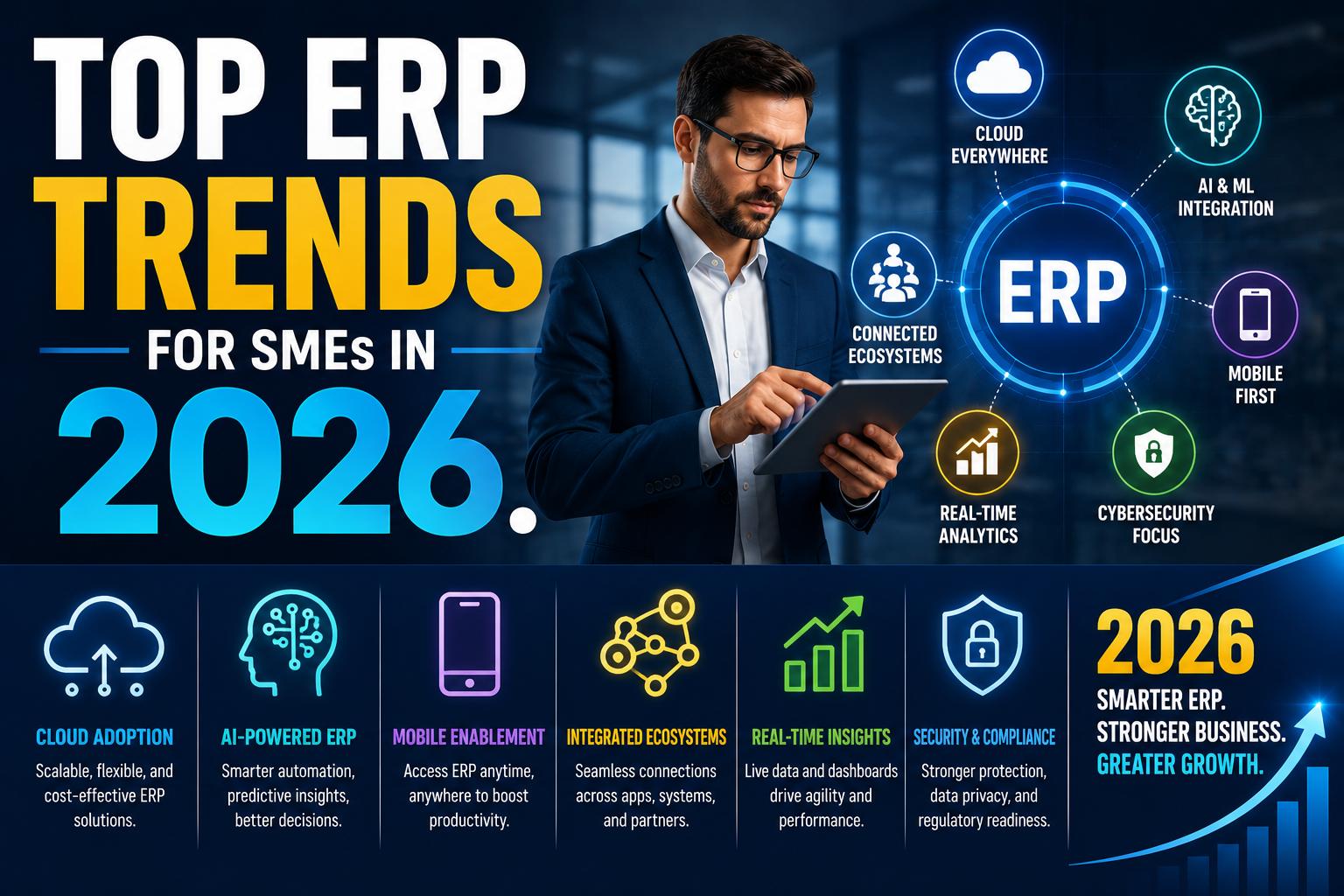
Enterprise Resource Planning (ERP) systems have evolved significantly over the past decade. What was once considered a tool primarily for large enterprises has become an essential platform for small and medium-sized businesses (SMEs) looking to improve efficiency, gain better visibility, and support growth. As technology continues to advance, ERP solutions are becoming smarter, more accessible, and more focused on delivering real-time business insights.
Here are some of the top ERP trends shaping the future for SMEs.
1. Cloud ERP Continues to Gain Momentum Cloud-based ERP solutions have become the preferred choice for many SMEs. Benefits include:
- Lower upfront costs
- Faster implementation
- Reduced IT infrastructure requirements
- Automatic updates
- Remote accessibility
Cloud ERP allows businesses to access critical information from anywhere while reducing the burden of maintaining on-premises servers and systems. For growing SMEs, cloud technology provides the flexibility needed to scale operations efficiently.
2. Artificial Intelligence (AI) and Automation AI is increasingly being integrated into ERP systems to help businesses work smarter. Examples include:
- Predictive demand forecasting
- Automated invoice processing
- Intelligent inventory recommendations
- Cash flow forecasting
- Automated anomaly detection
AI helps reduce manual effort while providing deeper insights into business performance. For SMEs, this means better decision-making without requiring large analytical teams.
3. Real-Time Reporting and Analytics Business leaders can no longer afford to wait until month-end to understand performance. Modern ERP systems provide:
- Real-time dashboards
- Interactive reporting
- Key performance indicators (KPIs)
- Financial analytics
- Operational insights
Access to up-to-date information enables faster decision-making and allows businesses to respond more effectively to changing market conditions.
4. Mobile Access and Anywhere Connectivity Today's workforce is increasingly mobile. ERP systems are expanding mobile capabilities to allow users to:
- Approve transactions
- Access reports
- Review inventory
- Manage customer information
- Monitor business performance
Whether working remotely, traveling, or managing multiple locations, decision-makers can stay connected to the business from virtually anywhere.
5. Increased Focus on Business Intelligence (BI) SMEs are placing greater emphasis on turning data into actionable insights. ERP platforms are increasingly incorporating advanced BI capabilities such as:
- Data visualization
- Trend analysis
- Forecasting
- Performance monitoring
- Profitability analysis
This helps organizations identify opportunities, reduce risks, and make more informed decisions.
6. Enhanced Inventory and Supply Chain Visibility Supply chain disruptions over recent years have highlighted the importance of inventory visibility. Modern ERP systems help SMEs:
- Monitor inventory in real time
- Improve demand forecasting
- Track supplier performance
- Optimize stock levels
- Reduce stockouts and excess inventory
Improved supply chain visibility helps businesses improve customer service while protecting cash flow.
7. Greater Integration Across Business Functions Businesses increasingly expect seamless integration between:
- Finance
- Sales
- Purchasing
- Inventory
- Manufacturing
- CRM
- E-commerce platforms
Integrated ERP environments eliminate data silos and provide a single source of truth across the organization. This improves collaboration and reduces duplicate data entry.
8. Industry-Specific ERP Solutions ERP vendors are developing more industry-focused functionality to address specific business requirements.
Examples include:
Manufacturing
- Production planning
- Bill of Materials (BOM)
- Shop floor management
Distribution
- Warehouse management
- Inventory optimization
- Logistics tracking
Professional Services
- Project management
- Resource planning
- Time and expense tracking
Industry-specific solutions often reduce implementation time and customization costs.
9. Stronger Cybersecurity and Compliance Features As businesses become more digital, protecting data has become a top priority. Modern ERP systems increasingly offer:
- Role-based security
- Multi-factor authentication
- Audit trails
- Data encryption
- Compliance reporting
SMEs are recognizing that strong security controls are essential for protecting sensitive financial and operational information.
10. ERP as a Foundation for Digital Transformation Many SMEs are using ERP as the foundation of their broader digital transformation initiatives. ERP systems help organizations:
- Automate workflows
- Improve collaboration
- Enhance customer experiences
- Increase operational efficiency
- Support data-driven decision-making
Rather than being viewed solely as accounting software, ERP is increasingly seen as a strategic business platform.
What These Trends Mean for SMEs Businesses that embrace modern ERP capabilities can benefit from: ✔ Better visibility into operations
✔ Improved decision-making
✔ Reduced manual processes
✔ Enhanced customer service
✔ Stronger financial control
✔ Greater operational efficiency
✔ Scalability for future growth The gap between businesses that leverage technology effectively and those that rely on manual processes continues to widen.
The Bottom Line ERP technology is evolving rapidly, giving SMEs access to tools that were once available only to large enterprises. Cloud computing, artificial intelligence, real-time analytics, mobility, and business intelligence are transforming how businesses operate and compete. For SMEs looking to improve efficiency, gain visibility, and prepare for future growth, staying informed about ERP trends is no longer optional—it is a strategic necessity. The businesses that thrive in the years ahead will be those that embrace innovation, leverage data effectively, and use modern ERP platforms to drive smarter, faster, and more profitable decisions.