Reducing Operational Costs: Practical Strategies for Improving Profitability
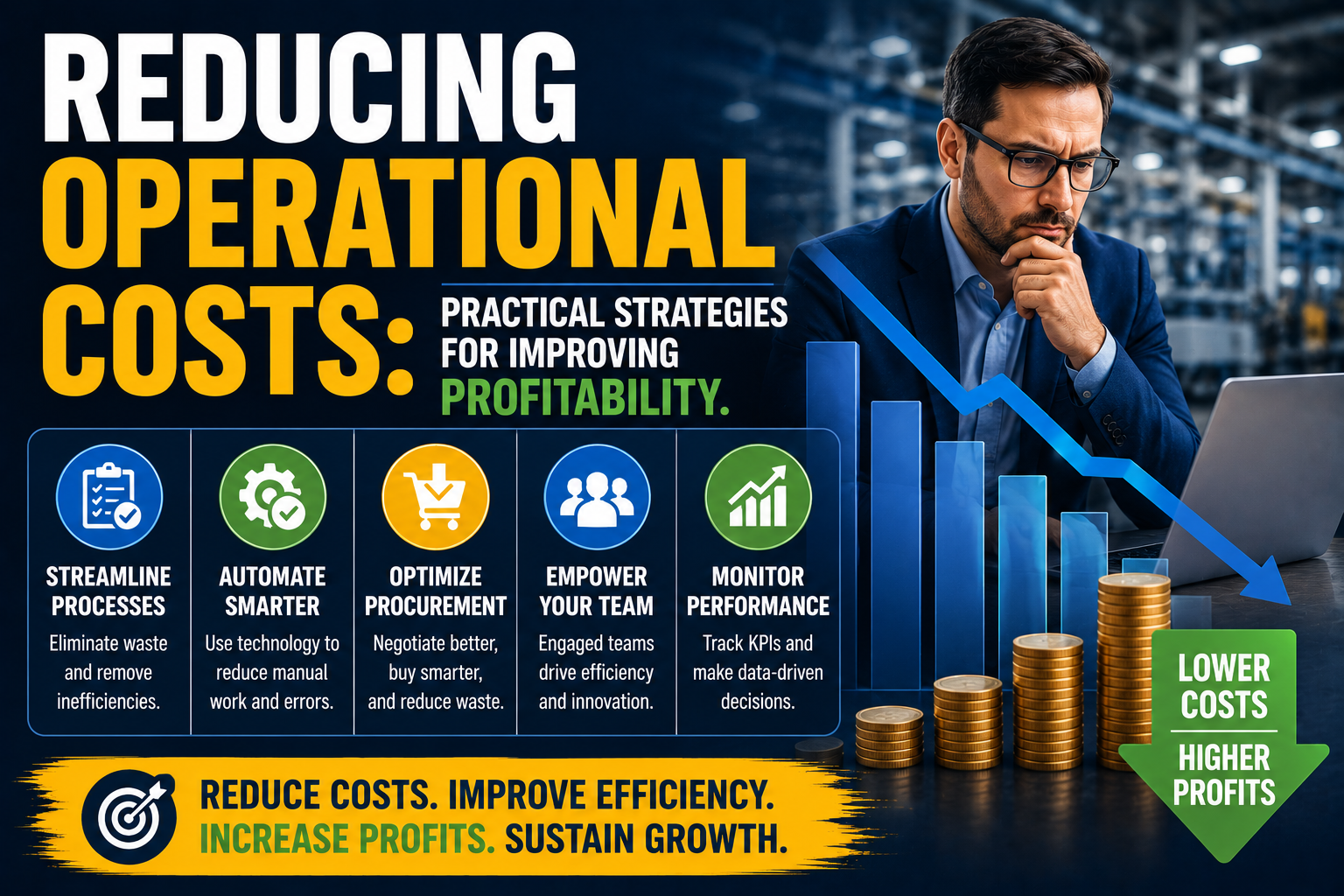
In today's competitive business environment, controlling operational costs is essential for maintaining profitability and supporting sustainable growth. However, reducing costs doesn't necessarily mean cutting staff or sacrificing quality. The most successful businesses focus on improving efficiency, eliminating waste, and optimizing processes. Here are some practical ways organizations can reduce operational costs while maintaining strong performance and customer satisfaction.
1. Automate Manual Processes Many businesses spend significant time and money on repetitive administrative tasks. Examples include:
- Data entry
- Invoice processing
- Purchase approvals
- Report generation
- Inventory updates
Manual processes increase labor costs and the likelihood of errors. Solution: Implement automation tools and integrated business systems that reduce repetitive work and improve accuracy.
2. Improve Inventory Management Excess inventory can tie up cash and increase operational expenses. Common inventory-related costs include:
- Storage fees
- Insurance
- Obsolescence
- Shrinkage
- Handling costs
At the same time, stock shortages can lead to lost sales and expedited shipping expenses. Solution: Use inventory planning and forecasting tools to maintain optimal stock levels and improve inventory turnover.
3. Eliminate Duplicate Work Disconnected systems often require employees to enter the same information multiple times. This can result in:
- Wasted time
- Increased errors
- Delayed processes
For example, manually transferring information between sales, purchasing, inventory, and accounting systems creates unnecessary effort. Solution: Integrate key business functions into a single platform to improve efficiency and data accuracy.
4. Optimize Procurement Processes Purchasing inefficiencies can significantly impact operating costs. Common challenges include:
- Buying from non-preferred suppliers
- Missing bulk purchasing opportunities
- Duplicate purchases
- Poor supplier management
Solution: Standardize procurement processes, monitor supplier performance, and negotiate favourable pricing agreements.
5. Reduce Operational Waste Waste occurs in many forms, including:
- Excess inventory
- Production scrap
- Rework
- Idle equipment
- Unnecessary movement of materials
- Time spent waiting for approvals
Small inefficiencies often accumulate into substantial costs over time. Solution: Regularly review workflows and identify areas where resources are being underutilized or wasted.
6. Improve Workforce Productivity Employees are one of the most valuable investments a business makes. Productivity challenges often arise from:
- Poor processes
- Outdated systems
- Lack of training
- Limited access to information
Solution: Provide employees with the tools, training, and information they need to perform their jobs efficiently. Higher productivity allows businesses to accomplish more without increasing costs.
7. Monitor and Control Overheads Many businesses focus heavily on direct costs while overlooking overhead expenses. Examples include:
- Utilities
- Software subscriptions
- Telecommunications
- Travel expenses
- Office supplies
These costs can grow gradually without attracting attention. Solution: Conduct regular reviews of recurring expenses and eliminate unnecessary spending where possible.
8. Use Data to Identify Inefficiencies You can't improve what you can't measure. Organizations should track key performance indicators (KPIs) such as:
- Inventory turnover
- Production efficiency
- Order fulfillment times
- Labor utilization
- Operating margins
Accurate data helps identify cost drivers and areas for improvement. Solution: Use reporting and analytics tools to gain visibility into operational performance.
9. Improve Equipment Utilization For manufacturing and asset-intensive businesses, equipment downtime can be costly. Unplanned breakdowns often result in:
- Lost production
- Overtime costs
- Emergency repairs
- Missed deadlines
Solution: Implement preventive maintenance programs and monitor equipment performance to reduce downtime.
10. Invest in Technology That Supports Efficiency Technology should help businesses work smarter, not harder. Modern ERP systems can help organizations:
- Automate workflows
- Improve inventory control
- Streamline procurement
- Enhance reporting
- Increase visibility across departments
The goal is not simply to reduce costs, but to improve operational efficiency while supporting growth.
The Role of ERP in Cost Reduction ERP systems provide a centralized platform that connects finance, inventory, purchasing, sales, manufacturing, and operations. This enables businesses to:
- Eliminate duplicate processes
- Improve data accuracy
- Reduce administrative effort
- Increase productivity
- Gain real-time visibility into performance
By providing better information and more efficient workflows, ERP systems help organizations identify opportunities to reduce costs without compromising service quality or growth objectives.
The Bottom Line Reducing operational costs is not about making indiscriminate cuts—it's about creating a more efficient and effective business. Organizations that focus on automation, process improvement, inventory optimization, data-driven decision-making, and operational visibility are better positioned to improve profitability and remain competitive. The most sustainable cost savings come from working smarter, improving efficiency, and eliminating waste throughout the organization.