Five ERP Selection Tips
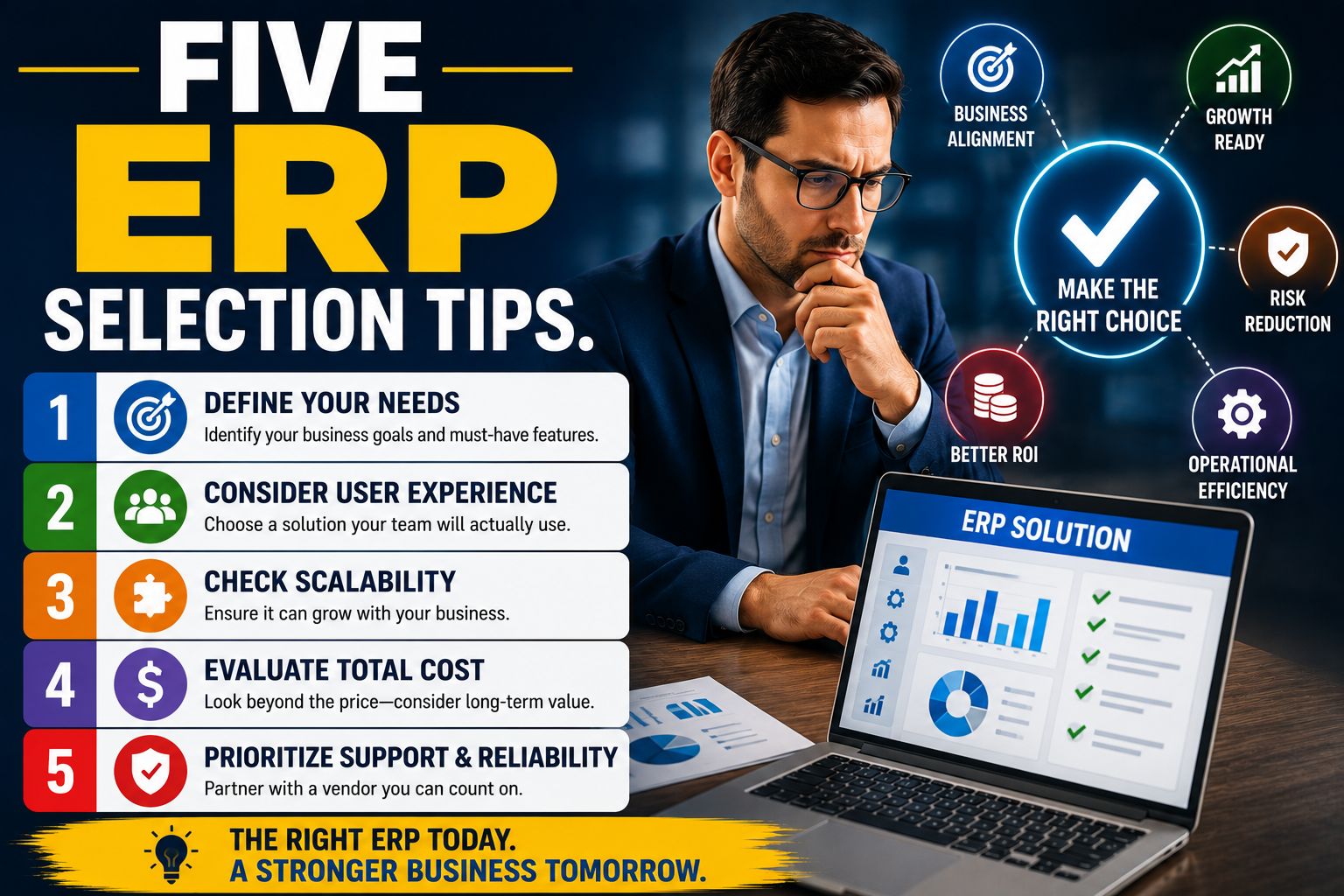
Selecting an ERP system is one of the most important technology decisions a business can make. The right solution can improve efficiency, provide greater visibility into operations, and support long-term growth. The wrong choice, however, can lead to costly implementation challenges, user frustration, and limited return on investment. With so many ERP solutions available, it's important to approach the selection process strategically. Here are five key tips to help ensure you choose the right ERP system for your business.
1. Focus on Business Requirements, Not Just Features Many organizations make the mistake of comparing ERP systems based solely on feature lists. Instead, start by identifying your business requirements:
- What challenges are you trying to solve?
- Which processes need improvement?
- What information do decision-makers need?
- Which manual tasks consume the most time?
Involve key stakeholders from departments such as:
- Finance
- Sales
- Operations
- Inventory
- Manufacturing
- Customer Service
A clear understanding of your requirements will help you evaluate solutions based on business value rather than marketing claims.
2. Choose a Solution That Can Scale With Your Growth Your ERP system should support not only your current needs but also your future plans. Consider whether the solution can accommodate:
- Business growth
- Additional users
- Multiple locations
- New product lines
- Increased transaction volumes
- International expansion
A system that works well today may become a limitation in a few years if it cannot scale alongside your business. Think long-term when evaluating ERP options.
3. Evaluate Industry Fit Not all ERP systems are designed for the same industries. Look for a solution that understands the specific needs of your business.
For example:
Manufacturing businesses may require:
- Production planning
- Bill of Materials (BOM) management
- Shop floor control
Distribution businesses may need:
- Warehouse management
- Inventory optimization
- Supply chain visibility
Professional services firms may focus on:
- Project management
- Resource planning
- Time and expense tracking
Industry-specific functionality can significantly reduce customization requirements and implementation costs.
4. Consider Implementation and Support ERP success depends on more than software alone. The implementation partner plays a critical role in:
- Project planning
- Process design
- Data migration
- User training
- Ongoing support
When evaluating vendors and partners, ask:
- What is their industry experience?
- How many successful implementations have they completed?
- What support services are available?
- How quickly do they respond to issues?
Choosing an experienced implementation partner often has a greater impact on project success than the software itself.
5. Prioritize Visibility and Reporting An ERP system should help you make better business decisions. Look for strong reporting and analytics capabilities, including:
- Real-time dashboards
- Financial reporting
- Inventory visibility
- Sales analysis
- Operational KPIs
- Profitability reporting
The ability to access accurate, timely information can improve decision-making across the entire organization. A good ERP system should not only record transactions—it should provide insights that drive business performance.
Questions to Ask During ERP Evaluation As you assess different ERP solutions, consider asking:
- How does the system support our key business processes?
- What functionality is included as standard?
- How scalable is the solution?
- What are the implementation timelines?
- What training is provided?
- How are upgrades managed?
- What is the total cost of ownership?
The answers to these questions can help you compare solutions more effectively and avoid unexpected surprises later.
The Bottom Line Choosing an ERP system is about more than technology—it's about finding a platform that aligns with your business goals and supports future growth. By focusing on business requirements, scalability, industry fit, implementation expertise, and reporting capabilities, organizations can make more informed decisions and increase the likelihood of a successful ERP project. The right ERP system becomes a foundation for growth, efficiency, and better decision-making. Taking the time to evaluate your options carefully today can deliver significant benefits for years to come.