How Data Improves Business Decisions
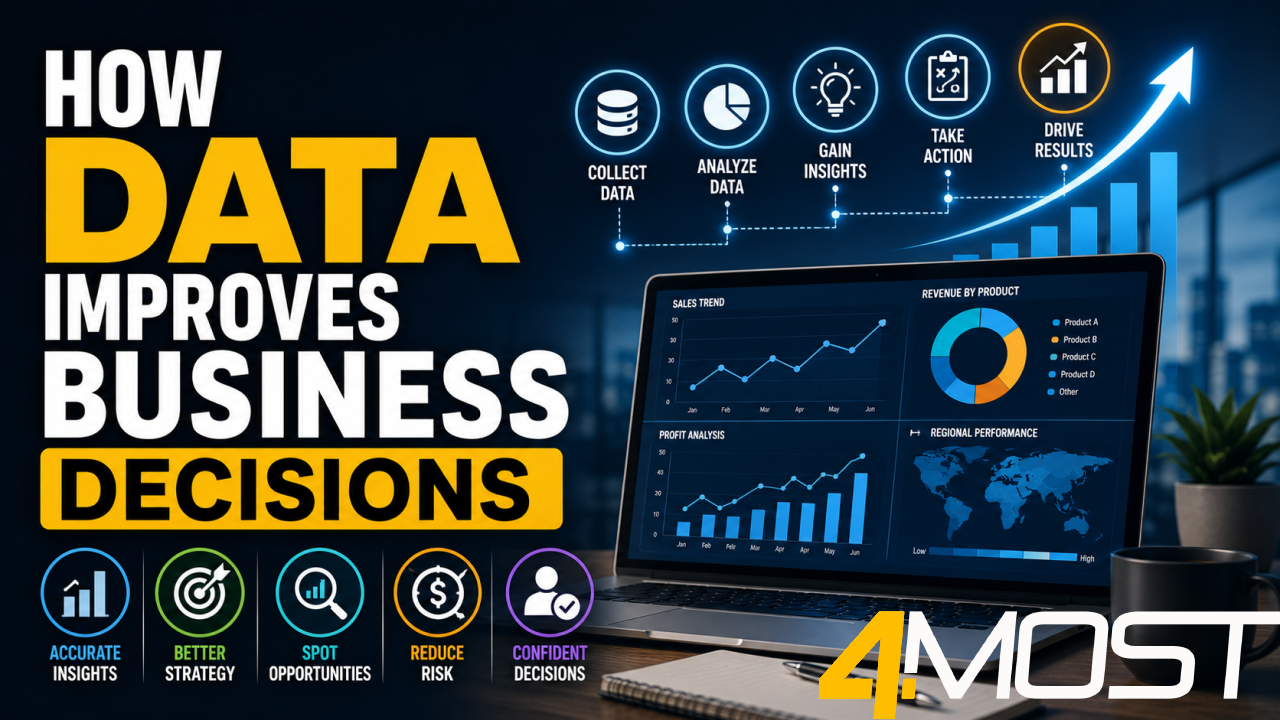
In today's fast-paced business environment, decisions can no longer rely solely on intuition or experience. While instinct still has its place, organizations that leverage accurate, real-time data are better positioned to respond to challenges, identify opportunities, and achieve sustainable growth.
Data has become one of the most valuable business assets, helping leaders make informed decisions with greater confidence and accuracy.
1. Provides Greater Visibility Into Business Performance
One of the biggest advantages of data is the ability to see what is happening across the business in real time.
Data helps answer critical questions such as:
- Are sales targets being met?
- Which products are most profitable?
- What is our current cash position?
- Which customers generate the highest margins?
- Where are operational bottlenecks occurring?
Without reliable data, decision-makers are often forced to rely on assumptions rather than facts.
2. Improves Financial Decision-Making
Accurate financial data allows businesses to make smarter decisions regarding:
- Budgeting
- Cash flow management
- Cost control
- Pricing strategies
- Investment planning
By understanding where money is being earned and spent, organizations can identify opportunities to improve profitability and reduce unnecessary expenses. For example, data may reveal that a seemingly successful product line generates lower margins than expected, prompting management to reassess pricing or production costs.
3. Enhances Customer Understanding
Customer data provides valuable insights into buying behavior and preferences.
Businesses can use data to:
- Identify top customers
- Understand purchasing trends
- Measure customer retention
- Improve customer service
- Personalize marketing efforts
These insights help organizations build stronger customer relationships and increase revenue opportunities.
4. Supports Better Inventory Management
Poor inventory decisions can negatively impact both profitability and cash flow.
Data-driven inventory management helps businesses:
- Maintain optimal stock levels
- Reduce excess inventory
- Prevent stock shortages
- Improve forecasting accuracy
- Increase inventory turnover
Access to real-time inventory information enables more informed purchasing and replenishment decisions.
5. Identifies Trends and Opportunities
Data allows businesses to move beyond reacting to events and start anticipating them.
Trend analysis can reveal:
- Seasonal demand patterns
- Emerging customer preferences
- Market opportunities
- Operational inefficiencies
- Areas for expansion
Organizations that identify trends early can gain a significant competitive advantage.
6. Reduces Risk Every business decision involves some level of risk.
Data helps reduce uncertainty by providing evidence-based insights into:
- Financial performance
- Customer behavior
- Market conditions
- Operational efficiency
While data cannot eliminate risk entirely, it helps businesses make more informed decisions and avoid costly mistakes.
7. Improves Operational Efficiency Operational data helps businesses understand how resources are being utilized.
Examples include:
- Employee productivity
- Production performance
- Equipment utilization
- Project profitability
- Supplier performance
By identifying inefficiencies, businesses can streamline processes, reduce costs, and improve overall performance.
8. Enables Faster Decision-Making In many organizations, delays occur because information is scattered across multiple systems, spreadsheets, and reports.
Real-time access to data allows managers to:
- Respond quickly to challenges
- Approve actions faster
- Address issues before they escalate
- Seize opportunities when they arise
Speed is often a competitive advantage, especially in rapidly changing markets.
9. Encourages Accountability
When performance metrics are clearly defined and measurable, accountability improves across the organization.
Data allows teams to track:
- Sales targets
- Production goals
- Service levels
- Financial performance
- Project outcomes
Clear visibility into results helps employees understand expectations and focus on achieving business objectives.
10. Supports Strategic Planning Long-term success depends on making informed strategic decisions.
Historical and real-time data provide valuable input for:
- Growth planning
- Market expansion
- Product development
- Resource allocation
- Capital investment decisions
Organizations that base strategy on reliable data are more likely to achieve their goals and adapt to changing market conditions.
The Role of ERP Systems in Data-Driven Decision-Making
Modern ERP systems play a critical role by bringing together data from across the business into a single platform. This provides:
- Real-time reporting
- Financial visibility
- Inventory insights
- Operational performance metrics
- Customer information
- Forecasting capabilities
With a single source of truth, leaders can make faster and more informed decisions based on accurate information.
The Bottom Line Good decisions require good information. Businesses that leverage data effectively gain greater visibility, improve operational efficiency, reduce risk, and identify opportunities for growth. In an increasingly competitive business environment, data is no longer just a reporting tool—it is a strategic asset that helps organizations make smarter decisions and achieve better outcomes. The businesses that succeed tomorrow will be the ones that use data today to guide their decisions with confidence.